
Oro Valley Directory Holdings
No authoritative catalog identifies an independent printed Oro Valley city directory run. The usable collection is the Tucson city directory series, because today's town was once ranch land, subdivisions, and rural Pima County within Tucson's wider directory market. The first Tucson volume dates to 1881. Publication was intermittent at first and, with few exceptions, annual after 1899. Local and digital repositories together provide every directory year known to exist through 2003, but that statement does not mean one unbroken annual series.
| Directory collection | Verified span | Custodian | How to consult it |
|---|---|---|---|
| Tucson city directories | 1881 through 2003, intermittent and then near-annual | PCPL, AHS, Ancestry, Arizona Memory | Print, microfilm, licensed database, or free scans |
| Directory of the City of Tucson | 1881 | Arizona Historical Society digitization | Free Arizona Memory viewer |
| Western Directory Co. series | Selected runs from 1917 through 1941 | State of Arizona Research Library | Free viewer and PDF where digitized |
| Main Library shelf | Print and microfilm, with gaps | Joel D. Valdez Main Library | Third-floor reference desk |
| Reverse directories | Exact historical years not posted | Pima County Public Library | In person or limited Infoline lookup |
The combined holdings matter. A missing volume at one desk may be available through another institution. Before traveling, ask which format holds the needed year and whether the address section survives. Staff can also explain remote database access and microfilm use.
Oro Valley Directory Geography
Oro Valley incorporated in 1974. Earlier residents may appear under Tucson, rural Pima County, a ranch, or a subdivision rather than the modern town name. Search Cañada del Oro and La Cañada with and without the ñ because older type, indexes, and optical character recognition often omit it. Pusch, Steam Pump Ranch, Honey Bee, Suffolk Hills, Rancho Vistoso, and specific subdivision names are strong alternate terms.
The present parcel may also have stood outside the town when a directory was compiled. Pair the entry with the Town's annexation-history and subdivision maps. Municipal status chooses the likely custodian for permits and civic records, while the directory label reflects the market and postal language of its own time.
Geography key. A Tucson-area listing can document an Oro Valley household even when neither the old volume nor address used today's town label.
Oro Valley Directory Images
The free Arizona Memory digital collections are a direct route to early Tucson volumes. The catalog includes the 1881 directory and official Western Directory Company scans. Search the catalog by place, year, publisher, and title. If the viewer's text search misses a surname, browse the alphabetic pages and try initials or a spelling variant.
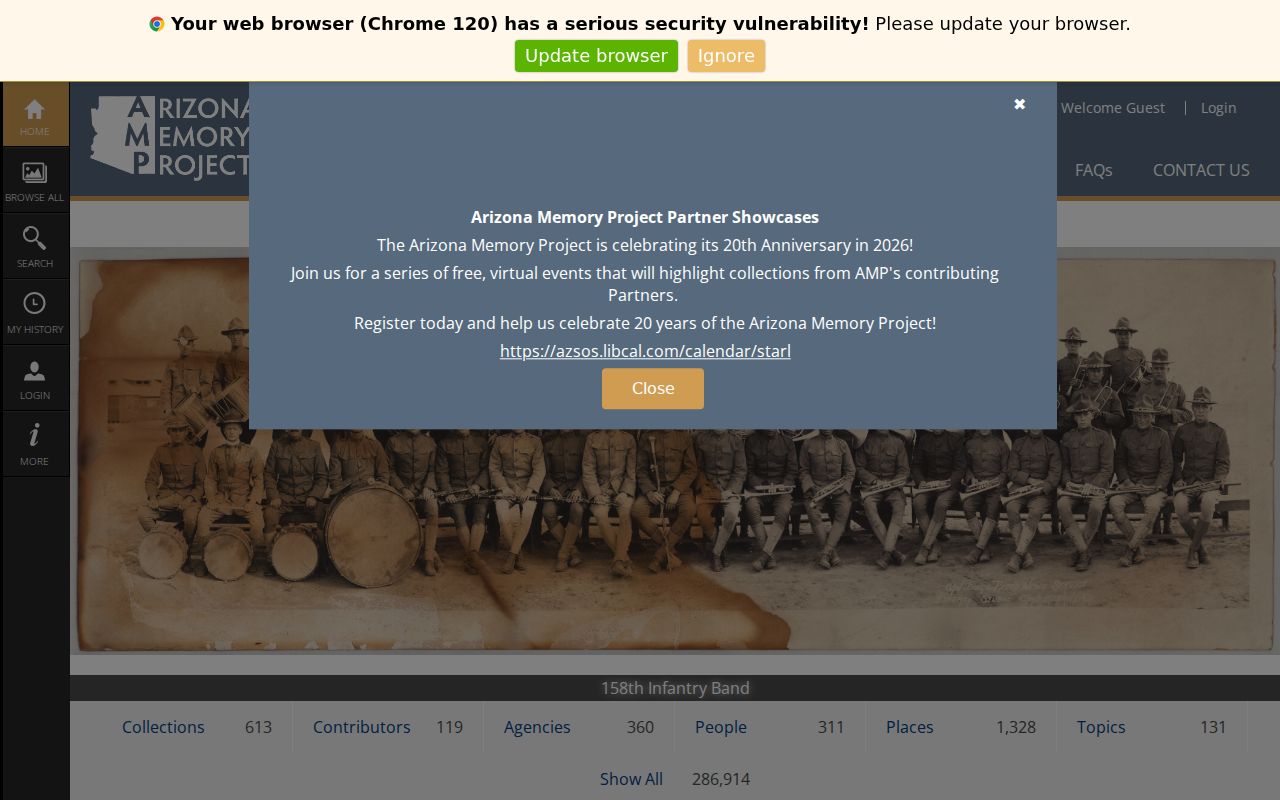
This catalog screen is the starting point for free scans, not proof that every known edition sits in one digital series. The 1917 metadata and 1928 PDF are useful anchors, while later or missing years may require PCPL, AHS, or a licensed library database.
The Pima County Public Library directory history explains the shared collection and why the local shelf has gaps.
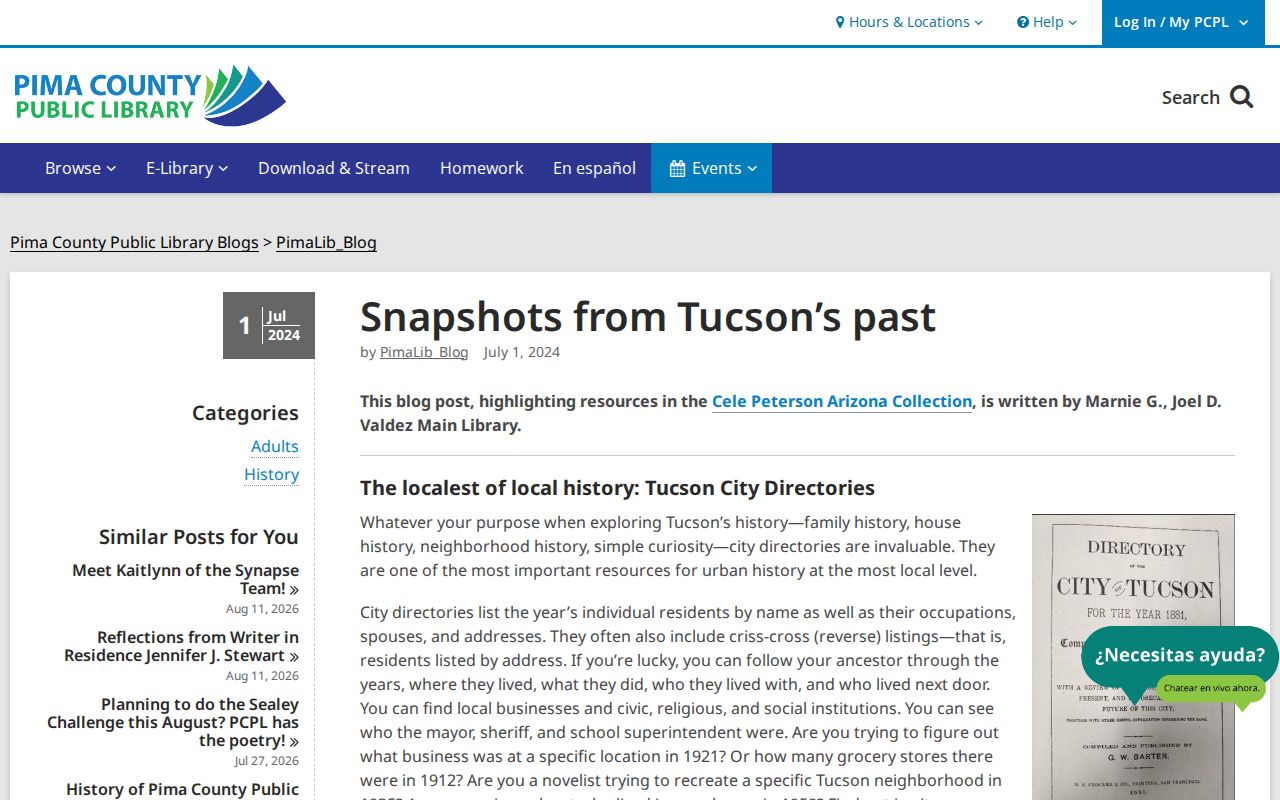
The library account helps distinguish an edition that was never issued from one held elsewhere. That distinction prevents a false conclusion when a household vanishes between surviving volumes.
Read Oro Valley Directory Entries
A 1928 Tucson entry shows how much detail can fit on one line. A person may be followed by a spouse in parentheses, a short form for work, an employer, a status letter, and an address. For example, the edition uses h before a householder address and r for someone who resides or rooms there. These marks associate a person with a place. They do not establish ownership.
| Printed name | Surname, given name, and often a middle initial; search initials and variants. |
|---|---|
| Spouse | A name in parentheses indicates a household association, not title. |
| Work details | An abbreviated occupation and, at times, an employer. |
| Status mark | h means householder; r means resides or rooms. |
| Street line | House number, direction, street, and suffix in that edition's style. |
Photograph or save the abbreviation key with the entry. By 2003, occupations had disappeared, while maps, carrier routes, and neighborhood demographics had been added. Evidence changes with the edition, so a field present in 1928 should not be assumed in every later book.
- Criss-cross directory
- An address-ordered section that turns a street and house number into listed occupants.
- Householder index
- A list organized around the person responsible for the listed household entry.
- Abbreviation key
- The volume's own legend for short forms, status marks, streets, and occupations.
Reverse Oro Valley Directory Searches
Reverse, or criss-cross, sections turn an address into names. They are ideal when the question starts with a house rather than a person. Historical reverse volumes have gaps because some were rental copies returned to their publishers. That local quirk means an empty shelf position does not prove no directory was made.
PCPL Infoline at 520-791-4010 will perform up to three address or telephone lookups. The service is a practical fallback when the correct historical volume is not online. Current U.S. and Canadian business and residential data is available through Reference Solutions with a PCPL card, including partial name and address searching. Current data should not be confused with the historic reverse run.
Note: Write down the edition year, page, exact address style, and every listed name so the result can be checked later.
Oro Valley Directory Timeline
The directory timeline crosses several record systems. It begins before the town existed and ends after Oro Valley had become a mature municipality. Read each point as a change in available evidence, not as proof of continuous annual publication.
- 1881: Tucson's first known printed city directory appears.
- 1899: The series becomes nearly annual, with exceptions.
- 1917-1941: Selected Western Directory Company editions are verified in free state digital holdings.
- 1974: Oro Valley incorporates, creating a separate municipal archive for later local records.
- 2003: The last known Tucson directory edition in the combined collection changes its mix of resident and map data.
Pima County's older title and map records remain essential outside this print timeline. The directory identifies a listed resident; the deed identifies a title party; the annexation map says which municipal body governed the parcel at a given point.
Trace Oro Valley Directory Households
Family history works best when the city directory is treated as a dated snapshot. Transcribe the whole line, including initials, spouse, status mark, work, and address. Then follow the person in both directions through each available edition. Inspect people with the same surname and others at the same address, but do not declare a relationship until another record supports it.
- Record the first clear entry and the edition's abbreviation rules.
- Move forward and backward one available year at a time, marking each address change.
- Use the reverse section to inspect the address and nearby listed households.
- Pair directory years with federal census schedules open through 1950.
- Check ownership against Pima County deeds and the assessor parcel, then test gaps with permits and newspapers.
A missing name can mean a move, death, unlisted status, a changed spelling, or a missing edition. It is not an answer by itself. When a historic directory find needs a modern official check, the Oro Valley resident lookup workflow separates same-name people across records.
Extend Oro Valley Directory Clues
Newspapers and biography files can explain a directory change. The Arizona Daily Star is searchable through PCPL and NewsBank from 1991, with full-page images from April 2018. The free Arizona Digital Newspaper Program covers Arizona papers from 1859 through 1922. The AHS James Ayres Newspaper Index holds more than 140,000 cross-referenced entries and about 300 subject files for the 1859-1911 period.
The Ayres index is a bridge, not the article. Use its citation to retrieve the underlying page on AHS microfilm. The Arizona Biographical Database, Social Security Death Index, school yearbooks, and obituary sources can then support a life event or date range. AHS research also requires searching finding aids because the full text is not all represented in its main catalog.
Oro Valley Directory Companions
The Oro Valley Historical Society began its holdings in 2005 with George and Mathilda Pusch family documents and photographs. Its collections now include manuscripts, newspapers, books, images, audiovisual material, art, and artifacts tied to greater Oro Valley. Research access is by arrangement and committee approval, with copies preferred over handling originals.
University of Arizona Special Collections adds regional biography files, photographs, manuscripts, and Southwest material. The Town's historic preservation resources and oral histories preserve incorporation-era and ranch-era voices. These sources can add context to a bare name and address without turning a story into proof of residence.
Map Oro Valley Directory Addresses
Tucson Sanborn fire-insurance maps are not blanket Oro Valley coverage. The Library of Congress offers a free 1901 Tucson atlas, and authoritative research identifies other Tucson editions. Their sheets can show structures and site features only within the mapped area. Later Oro Valley subdivisions usually require plats, assessor records, permits, aerial images, and annexation maps instead.
A plat date also does not prove a house or household existed. Linda Vista Citrus Tracts No. 2 was platted in 1937, yet only five of its present houses were built before 1965. Match the directory year to evidence that the structure stood, then preserve the subdivision and lot information when the street label changes.